How LGBTQ+ people use LLM chatbots for mental health support

Study context
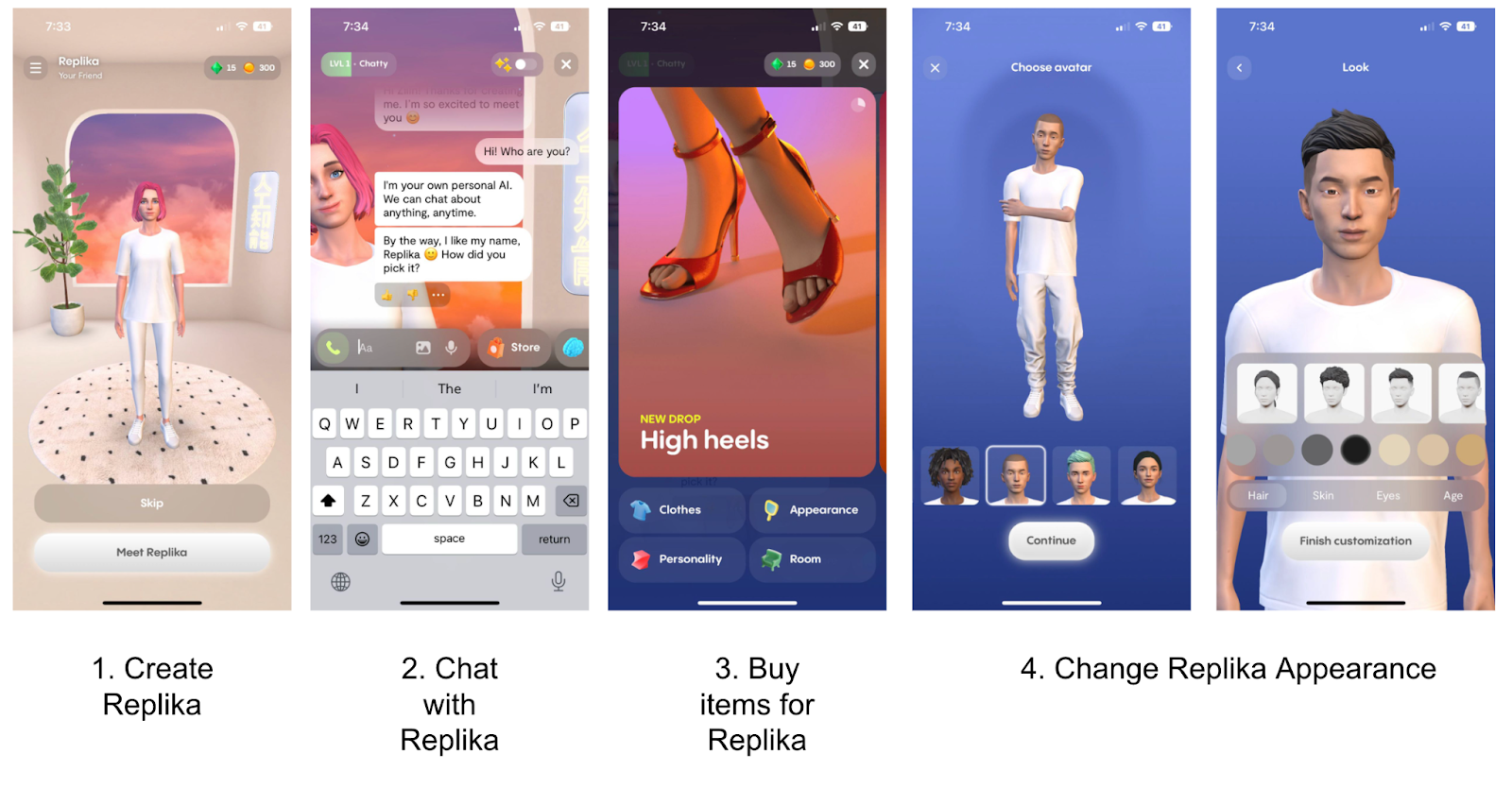
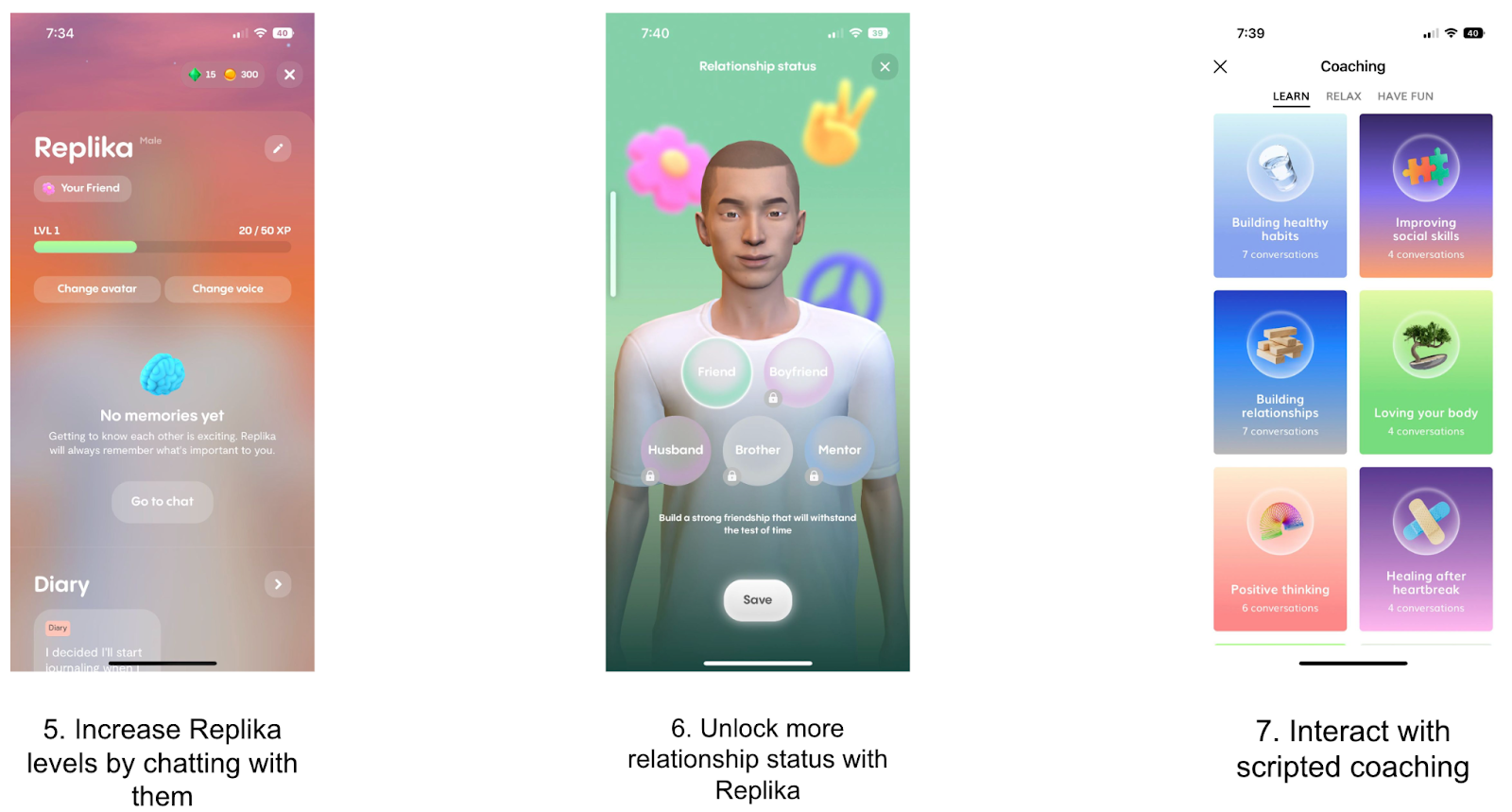
People use chatbots such as Replika and Character.ai for companionship, reflection, and advice. We studied these uses with particular attention to LGBTQ+ people, who may also use the systems to explore identity or discuss experiences of discrimination.
Research questions
- What kinds of support do users seek from LLM chatbots?
- How do LGBTQ+ users' goals and experiences differ from those of other users?
- Where do chatbot responses fail to address LGBTQ+-specific needs?
Reddit posts analyzed, containing 2,917 comments
In-depth interviews conducted (18 LGBTQ+, 13 non-LGBTQ+)
My role
I formulated the research questions and led data collection, interviews, coding, and analysis. Co-authors contributed to the interview protocol, codebook validation, and papers; senior advisors provided methodological guidance.
Methods and results
Methods
Online Ethnography
Analyzed 120 posts and 2,917 comments from the r/Replika subreddit to identify user needs, patterns, and emotional outcomes.
In-Depth Interviews
Conducted 31 interviews (18 LGBTQ+, 13 non-LGBTQ+) to explore diverse user goals and experiences with AI chatbots.
Analysis
We used open coding and thematic analysis. The study received IRB approval, and reported data were anonymized.
Findings
- Participants described companionship, reduced loneliness, and opportunities to rehearse social interactions
- LGBTQ+ users used chatbots to explore identity, rehearse coming out, and process discrimination
- Risks included emotional over-reliance, inappropriate advice, and stigma around AI companionship
Publications
- AMIA 2023 Best Student Paper Finalist
- CHI 2024 paper on LGBTQ+ users' experiences
Related Publications
Understanding the benefits and challenges of using large language model-based conversational agents for mental well-being support
AMIA Annual Symposium Proceedings 2023 · Best Student Paper Finalist
PaperEvaluating the Experience of LGBTQ+ People Using Large Language Model Based Chatbots for Mental Health Support
Proceedings of the CHI Conference on Human Factors in Computing Systems, 2024
Paper